In today’s digital age, ensuring the security of our online activities and expanding the capabilities of our home networks are more important than ever. Two powerful tools that can help you achieve these goals are OpenVPN and DD-WRT. Here’s a straightforward guide to understanding what these technologies are and how they can be beneficial.
What is OpenVPN?
OpenVPN is a software application that allows you to create a secure connection over the internet between your computer and a server. Think of it as a protective tunnel for your internet traffic, shielding your data from prying eyes. This is particularly useful if you often use public Wi-Fi networks, which can be less secure and more vulnerable to hacking. By using OpenVPN, you can ensure that your sensitive information, such as passwords and personal details, are encrypted and safe from cyber threats.
Key Benefits of OpenVPN:
Security: Encrypts your internet connection to provide enhanced security.
Privacy: Masks your IP address, which helps keep your online activities private.
Accessibility: Allows you to access websites and services that may be restricted in your area.
What is DD-WRT?
DD-WRT is a type of firmware that can replace the default firmware on your wireless router. Firmware is essentially the operating system that runs on your router, managing everything from network traffic to security features. Many factory-installed firmwares provide only basic functionalities. DD-WRT, on the other hand, is an open-source alternative that boosts your router’s capabilities significantly.
Key Benefits of DD-WRT:
Enhanced Performance: Improves Wi-Fi signal strength and extends the range of your network.
Advanced Features: Offers features like bandwidth monitoring, access controls, and the ability to set up a virtual private network (VPN).
Customization: Allows more control over your network’s behavior and settings.
Why Combine OpenVPN with DD-WRT?
Using OpenVPN in conjunction with DD-WRT can transform your router into a powerful gateway that secures your entire home’s internet traffic. By installing OpenVPN on a DD-WRT router, you can ensure that all data passing through your router is encrypted, which adds an extra layer of security to every device connected to your network.
How Can You Get Started?
Setting up OpenVPN and DD-WRT might sound daunting, but there are plenty of resources and guides available to help you. Many communities and forums are dedicated to DD-WRT and OpenVPN, where you can find detailed instructions and get advice from experienced users. Additionally, considering a professional setup might be a good idea if you’re not comfortable undertaking the installation yourself.
Troubleshooting Common OpenVPN Issues on DD-WRT Routers
DD-WRT routers are popular for their robust features and flexibility compared to standard firmware shipped with wireless routers. However, setting up advanced features like an OpenVPN client can sometimes lead to errors if not configured correctly. Two common issues encountered during OpenVPN setups on DD-WRT routers are: unrecognized options in the configuration and errors related to Data Channel Offload (DCO). Here, we’ll walk through solutions to these problems, ensuring a smoother VPN experience.
Issue 1: Unrecognized Option “block-outside-dns“
Problem Description:
The error “Options error: Unrecognized option or missing or extra parameter(s) in [PUSH-OPTIONS]:3: block-outside-dns (2.6.10)” typically indicates that the OpenVPN client on DD-WRT does not recognize or support the `block-outside-dns` directive. This directive is commonly used on Windows clients to prevent DNS leaks but is not applicable or necessary for DD-WRT setups.
Solution Steps:
Access Your VPN Server Configuration: Log into your OpenVPN server where your VPN configuration files are stored. This might be a PiVPN setup on a Raspberry Pi or any other Linux-based server running OpenVPN.
Modify the Server Configuration:
Open the server’s configuration file, usually located in /etc/openvpn/server.conf.
Use a text editor like nano (sudo nano /etc/openvpn/server.conf) to edit the file.
Find and comment out the line push "block-outside-dns" by adding a # at the beginning of the line. Now your configuration should look like this
# Prevent DNS leaks on Windows
#push "block-outside-dns"
Save and exit the editor.
Restart the OpenVPN Service: Apply the changes by restarting the OpenVPN service with sudo systemctl restart openvpn@server.
Verify on DD-WRT: Reconnect the DD-WRT router to your VPN to ensure the error does not reappear.
Issue 2: Error Installing Key Material in DCO
Problem Description:
The error “Impossible to install key material in DCO: No such file or directory” refers to problems involving the Data Channel Offload feature, which is intended to enhance VPN performance by offloading certain processing tasks from the CPU.
Solution Steps:
Check VPN Configuration Files: Ensure all necessary certificates and keys (CA certificate, client certificate, and client key) are correctly placed and accurately referenced in your DD-WRT’s VPN configuration.
Disable DCO (If Unnecessary):
DCO might not be supported adequately by all hardware or DD-WRT builds. To disable DCO, access the VPN configuration file on your router via the administration interface.
Look for any DCO-related directives and disable them (comment out or remove). You can disable DCO by using the following line to the additional configuration section of your OpenVPN configuration
disable-dco
Firmware Update: Confirm that your DD-WRT firmware is up to date, as updates may include fixes and enhancements for VPN functionalities.
Check File Paths and Permissions: Use SSH to connect to your router and verify that all referenced files in your VPN configuration exist at the specified paths and have appropriate permissions.
Consult Community Forums: If the issue persists, the DD-WRT community forums are a valuable resource for troubleshooting specific to your router model and firmware version.
Final Thoughts
Troubleshooting VPN issues on DD-WRT can be complex, but resolving these common errors can greatly enhance your network’s functionality and security. Ensuring that your VPN configuration is appropriate for your specific router and keeping your system up-to-date are critical steps in maintaining a secure and efficient network.
In conclusion, both OpenVPN and DD-WRT are excellent tools to enhance the security and functionality of your home network. Whether you’re looking to protect your personal information or simply want to boost your internet connection across your household, these technologies offer practical solutions that are worth considering. Embrace these tools to take control of your digital home environment and enjoy a safer, more efficient online experience.
The Ethereum Virtual Machine (EVM) is akin to a global, decentralized computer that exists across thousands of individual computers worldwide. This “computer” executes programs known as smart contracts, which are automated contracts whose terms are written directly into code, allowing them to operate independently of intermediaries.
How Smart Contracts Work
Smart contracts streamline processes such as digital agreements and transactions. For example, in a leasing agreement, a smart contract can automate monthly rent payments from a tenant’s digital wallet to a landlord’s wallet, adhering to the terms with precision and reliability. This automation is set into motion through the following steps:
Creation: A developer writes the contract in a specific programming language.
Deployment: The contract is uploaded to the Ethereum blockchain.
Execution: It is then executed automatically by the EVM upon being triggered by transactions.
Comparing Blockchain Platforms
While Ethereum was the pioneer, other blockchains like Solana, Polygon, and TON (The Open Network) also support smart contracts, each offering unique benefits.
Solana
High Speed: Solana processes thousands of transactions per second, offering a significant speed advantage over Ethereum.
Low Costs: Its efficiency ensures that transaction fees are minimal, fostering cost-effective operations.
Scalability: The design allows scaling with hardware advancements, maintaining high-speed capabilities.
Polygon
Ethereum Compatibility: Acts as a side-chain to Ethereum, facilitating faster and cheaper transactions.
Low Transaction Fees: By processing transactions off the main Ethereum chain, it reduces costs significantly.
Speed: Provides quicker transaction processing times, enhancing the user experience.
TON (The Open Network)
Speed and Efficiency: Designed for quick processing at low costs, suitable for high-load applications.
Versatility: Supports features like user-friendly wallet services and decentralized storage.
User-Friendliness: Focuses on accessibility, aiming to bring blockchain to the mainstream.
These platforms enhance user experience through faster transactions and reduced costs, support high transaction volumes, and offer security and reliability due to their decentralized nature. Each blockchain serves different use cases, allowing developers to choose based on their specific needs for efficiency and functionality.
Event-based systems have emerged as a powerful architectural paradigm, enabling applications to be more scalable, flexible, and decoupled. By orchestrating system behaviors through events, these architectures facilitate the design of responsive, asynchronous systems that can easily adapt to changing requirements and scale. However, the adoption of event-based systems is not without its challenges. From debugging complexities to ensuring data consistency, developers must navigate a series of hurdles to leverage the full potential of event-driven architectures effectively. This article delves into the critical challenges associated with event-based systems and provides insights into addressing them.
Debugging and Testing Complexities
One of the most daunting aspects of event-based systems is the complexity involved in debugging and testing. The asynchronous and decoupled nature of these systems makes it challenging to trace event flows and understand how components interact. Developers must adopt sophisticated tracing and logging mechanisms to visualize event paths and diagnose issues, which can significantly increase the complexity of testing strategies.
Ensuring Event Ordering
Maintaining a correct sequence of event processing is crucial for the integrity of an event-based system. This becomes particularly challenging in distributed environments, where events may originate from multiple sources at different times. Implementing mechanisms to ensure the orderly processing of events, such as timestamp-based ordering or sequence identifiers, is essential to prevent race conditions and maintain system consistency.
Complex Error Handling
Error handling in event-driven architectures requires careful consideration. The loose coupling between components means errors need to be communicated and handled across different parts of the system, often necessitating comprehensive strategies for error detection, logging, and recovery.
Latency and Throughput Challenges
Balancing latency and throughput is a critical concern in event-based systems. While these architectures can scale effectively by adding more consumers, the latency involved in processing and reacting to events can become a bottleneck, especially under high load conditions. Designing systems with efficient event processing mechanisms and scaling strategies is vital to mitigate these concerns.
Mitigating Event Storms
Event storms, where a flood of events overwhelms the system, pose a significant risk to the stability and performance of event-based architectures. Implementing back-pressure mechanisms and rate limiting can help control the flow of events and prevent system overload.
Dependency Management
Although event-based systems promote decoupling, they can also introduce complex, hidden dependencies between components. Managing these dependencies requires a clear understanding of the event flow and interactions within the system to avoid unintended consequences and ensure smooth operation.
Data Consistency and Integrity
Maintaining data consistency across distributed components in response to events is a major challenge. Event-based systems often require strategies such as event sourcing or implementing distributed transactions to ensure that data remains consistent and accurate across the system.
Security Implications
The need to secure event-driven architectures cannot be overstated. Events often carry sensitive data that must be protected, necessitating robust security measures to ensure data confidentiality and integrity as it flows through the system.
Scalability vs. Consistency
Event-based systems face the classic trade-off between scalability and consistency. Achieving high scalability often comes at the cost of reduced consistency guarantees. Finding the right balance based on system requirements is critical to the successful implementation of event-driven architectures.
Tooling and Monitoring
Effective monitoring and management are essential for maintaining the health of an event-based system. However, the lack of visibility into asynchronous event flows and distributed components can make monitoring challenging. Selecting the right set of tools that offer comprehensive insights into the system’s operation is crucial.
Conclusion
While event-based systems offer numerous advantages, successfully implementing them requires overcoming a range of challenges. By understanding and addressing these challenges, developers can build robust, scalable, and efficient event-driven architectures. The key lies in careful planning, adopting best practices, and leveraging appropriate tools and technologies to navigate the complexities of event-based systems. With the right approach, the benefits of event-driven architecture can be fully realized, leading to more responsive and adaptable applications.
Understanding AppDomains in .NET Framework and .NET 5 to 8
AppDomains, or Application Domains, have been a fundamental part of isolation and security in the .NET Framework, allowing multiple applications to run under a single process without affecting each other. However, the introduction of .NET Core and its evolution through .NET 5 to 8 has brought significant changes to how isolation and application boundaries are handled. This article will explore the concept of AppDomains in the .NET Framework, their transition and replacement in .NET 5 to 8, and provide code examples to illustrate these differences.
AppDomains in .NET Framework
In the .NET Framework, AppDomains served as an isolation boundary for applications, providing a secure and stable environment for code execution. They enabled developers to load and unload assemblies without affecting the entire application, facilitating application updates, and minimizing downtime.
Creating an AppDomain
using System;

namespace NetFrameworkAppDomains
{
    class Program
    {
        static void Main(string[] args)
        {
            // Create a new application domain
            AppDomain newDomain = AppDomain.CreateDomain("NewAppDomain");

            // Load an assembly into the application domain
            newDomain.ExecuteAssembly("MyAssembly.exe");

            // Unload the application domain
            AppDomain.Unload(newDomain);
        }
    }
}
AppDomains in .NET 5 to 8
With the shift to .NET Core and its successors, the concept of AppDomains was deprecated, reflecting the platform’s move towards cross-platform compatibility and microservices architecture. Instead of AppDomains, .NET 5 to 8 emphasizes on assembly loading contexts for isolation and the use of containers (like Docker) for application separation.
AssemblyLoadContext in .NET 5 to 8
using System;
using System.Reflection;
using System.Runtime.Loader;

namespace NetCoreAssemblyLoading
{
    class Program
    {
        static void Main(string[] args)
        {
            // Create a new AssemblyLoadContext
            var loadContext = new AssemblyLoadContext("MyLoadContext", true);

            // Load an assembly into the context
            Assembly assembly = loadContext.LoadFromAssemblyPath("MyAssembly.dll");

            // Execute a method from the assembly (example method)
            MethodInfo methodInfo = assembly.GetType("MyNamespace.MyClass").GetMethod("MyMethod");
            methodInfo.Invoke(null, null);

            // Unload the AssemblyLoadContext
            loadContext.Unload();
        }
    }
}
Differences and Considerations
Isolation Level: AppDomains provided process-level isolation without needing multiple processes. In contrast, AssemblyLoadContext provides a lighter-weight mechanism for loading assemblies but doesn’t offer the same isolation level. For higher isolation, .NET 5 to 8 applications are encouraged to use containers or separate processes.
Compatibility: AppDomains are specific to the .NET Framework and are not supported in .NET Core and its successors. Applications migrating to .NET 5 to 8 need to adapt their architecture to use AssemblyLoadContext or explore alternative isolation mechanisms like containers.
Performance: The move away from AppDomains to more granular assembly loading and containers reflects a shift towards microservices and cloud-native applications, where performance, scalability, and cross-platform compatibility are prioritized.
Conclusion
While the transition from AppDomains to AssemblyLoadContext and container-based isolation marks a significant shift in application architecture, it aligns with the modern development practices and requirements of .NET applications. Understanding these differences is crucial for developers migrating from the .NET Framework to .NET 5 to
Carbon sequestration is a critical process that captures and stores carbon dioxide from the atmosphere, playing a significant role in mitigating the effects of global climate change caused by elevated levels of carbon dioxide.
The Carbon Cycle
Carbon, a vital element for life, circulates in various forms on Earth, combining with oxygen to form carbon dioxide (CO2), a gas that traps heat. This gas is emitted both naturally and through human activities, mainly from the combustion of fossil fuels.
Types of Carbon Sequestration
Carbon sequestration is divided into two categories: biological and geological.
Biological Carbon Sequestration
This type of sequestration involves the storage of CO2 in vegetation, soils, and oceans. Plants absorb carbon during photosynthesis, converting it into soil organic carbon (SOC).
Geological Carbon Sequestration
Geological sequestration refers to the storage of CO2 in underground geological formations. The CO2 is liquefied under pressure and injected into porous rock formations.
What Happens to Sequestered Carbon?
Sequestered carbon undergoes various processes. In biological sequestration, it is stored in plant matter and soil, potentially being released back into the atmosphere upon the death of the plant or disturbance of the soil. In geological sequestration, CO2 is stored deep underground, where it may eventually dissolve in subsurface waters.
Side Effects of Carbon Sequestration
While carbon sequestration offers a promising solution to climate change, it comes with potential side effects. For geological sequestration, risks include leakage due to rock layer fractures or well issues, which could contaminate soil and groundwater. Additionally, CO2 injections might trigger seismic events or cause pH levels in water to drop, leading to rock weathering.
In conclusion, carbon sequestration presents a viable method for reducing the human carbon footprint, but its potential side effects and the sequestered carbon must be carefully monitored.
Sources of Information
“Carbon Sequestration”, National Geographic
“Carbon Sequestration”, U.S. Department of Energy
“Geological Carbon Sequestration”, U.S. Geological Survey
“Seismic events triggered by CO2 injection”, ScienceDirect
“Effects of CO2 on pH of water samples”, Journal of Environmental Science
“Soil Organic Carbon”, Soil Science Society of America
“Carbon Sequestration in Subsurface Waters”, Nature Geoscience
Carbon credit allowances are a key component in the fight against climate change. They are part of a cap-and-trade system designed to reduce greenhouse gas emissions by setting a limit on emissions and allowing the trading of emission units, which are known as carbon credits. One carbon credit is equivalent to one ton of carbon dioxide or the mass of another greenhouse gas with a similar global warming potential1.
How Carbon Credit Allowances Work
In a cap-and-trade system, a governing body sets a cap on the total amount of greenhouse gases that can be emitted by all covered entities. This cap is typically reduced over time to encourage a gradual reduction in overall emissions. Entities that emit greenhouse gases must hold sufficient allowances to cover their emissions, and they can obtain these allowances through initial allocation, auction, or trading with other entities.
Entities Issuing Carbon Credit Allowances in North America
In North America, several entities are responsible for issuing carbon credit allowances:
California Air Resources Board (CARB): CARB oversees California’s cap-and-trade program, which is one of the largest in the world. It issues allowances that can be traded within California and with linked programs4.
Regional Greenhouse Gas Initiative (RGGI): RGGI is a cooperative effort among Eastern states to cap and reduce CO2 emissions from the power sector. It provides allowances through auctions2.
Quebec’s Cap-and-Trade System: Quebec has linked its cap-and-trade system with California’s, forming a large carbon market in North America. The government of Quebec issues offset credits4.
Additionally, there are voluntary standards and registries such as Verra, the Climate Action Reserve, the American Carbon Registry, and Gold Standard that develop and certify projects for carbon credits used in quasi-compliance markets like CORSIA and Emission Trading Schemes1.
Conclusion
Carbon credit allowances are an essential tool for managing greenhouse gas emissions and incentivizing the reduction of carbon footprints. The entities mentioned above play a pivotal role in the North American carbon market, providing the framework for a sustainable future.
For more information on these entities and their programs, you can visit their respective websites:
By understanding and participating in carbon credit allowance systems, businesses and individuals can contribute to the global effort to mitigate climate change and move towards a greener economy.
Good News for Copilot Users: Generative AI for All!
Exciting developments are underway for users of Microsoft Copilot, as the tool expands its reach and functionality, promising a transformative impact on both professional and personal spheres. Let’s dive into the heart of these latest updates and what they mean for you.
Copilot’s Expanding Horizon
Originally embraced by industry giants like Visa, BP, Honda, and Pfizer, and with support from partners including Accenture, KPMG, and PwC, Microsoft Copilot has already been making waves in the business world. Notably, an impressive 40% of Fortune 100 companies participated in the Copilot Early Access Program, indicating its wide acceptance and potential.
Copilot Pro: A Game Changer for Individuals
The big news is the launch of Copilot Pro, specifically designed for individual users. This is a significant step in democratizing the power of generative AI, making it accessible to a broader audience.
Three Major Enhancements for Organizations
Copilot for Microsoft 365 Now Widely Available: Small and medium-sized businesses, ranging from solo entrepreneurs to fast-growing startups with up to 300 people, can now leverage the full power of Copilot as it becomes generally available for Microsoft 365.
No More Seat Limits: The previous requirement of a 300-seat minimum purchase for Copilot’s commercial plans has been lifted, offering greater flexibility and scalability for businesses.
Expanded Eligibility: In a strategic move, Microsoft has removed the necessity for a Microsoft 365 subscription to use Copilot. Now, Office 365 E3 and E5 customers are also eligible, widening the potential user base.
A Future Fueled by AI
This expansion marks a new chapter for Copilot, now available to a vast range of users, from individuals to large enterprises. The anticipation is high to see the innovative ways in which these diverse groups will utilize Copilot.
Stay Updated
For more in-depth information and to stay abreast of the latest developments in this exciting journey of Microsoft Copilot, be sure to check out Yusuf Mehdi’s blog. You can find the link in the comments below.
Carbon credits are a key component in national and international emissions trading schemes to control carbon dioxide (CO2) emissions. One carbon credit represents the right to emit one metric ton of CO2 or an equivalent amount of other greenhouse gases.
The Theory Behind Carbon Credits
The idea is to reduce emissions by giving companies a financial incentive to lower their carbon footprint. If a company emits less than its allowance, it can sell its excess credits to another company that exceeds its limits. This creates a market for carbon credits, making it financially beneficial for companies to invest in cleaner technologies.
Carbon Credits: A Teenager’s Analogy
Let’s break it down with an example that’s easy to understand:
Imagine you’re a teenager with a weekly allowance, and you’re only allowed to spend it on certain things. If you want to buy something that’s not on the list, you need a special “permission slip” from someone who has extra and doesn’t need it.
Carbon credits work similarly. Companies are given a limit on how much they can pollute. If they want to pollute more, they need to buy carbon credits from others who haven’t used up their limit. This system caps total pollution and encourages companies to pollute less because they can sell their extra credits if they’re under the limit.
It’s like a game where the goal is to pollute less and earn or save money by not using up your “pollution allowance.” The less you pollute, the more credits you have to sell, and the more money you can make. It’s a way to motivate companies to be more environmentally friendly.
Conclusion
In summary, carbon credits are an innovative solution to a global problem, offering a way to balance economic growth with environmental responsibility. By turning carbon emissions into a commodity, we can create a market that rewards sustainability and penalizes waste.
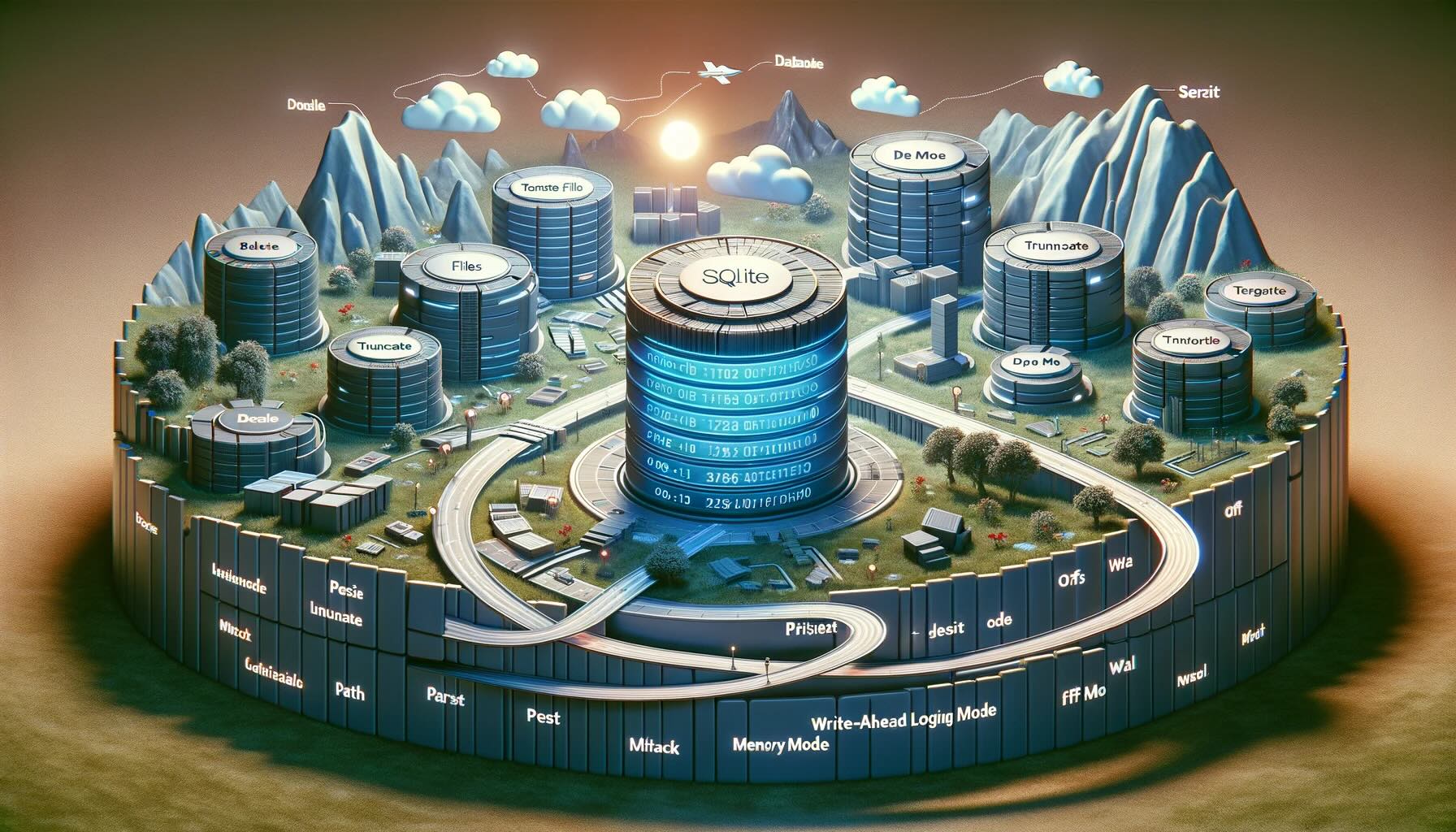
SQLite and Its Journal Modes: Understanding the Differences and Advantages
SQLite, an acclaimed lightweight database engine, is widely used in various applications due to its simplicity, reliability, and open-source nature. One of the critical aspects of SQLite that ensures data integrity and supports various use-cases is its “journal mode.” This mode is a part of SQLite’s transaction mechanism, which is vital for maintaining database consistency. In this article, we’ll explore the different journal modes available in SQLite and their respective advantages.
Understanding Journal Modes in SQLite
Journal modes in SQLite are methods used to handle transactions and rollbacks. They dictate how the database engine logs changes and how it recovers in case of failures or rollbacks. There are several journal modes available in SQLite, each with unique characteristics suited for different scenarios.
1. Delete Mode
Description:
The default mode in SQLite, Delete mode, creates a rollback journal file alongside the database file. This file records a copy of the original unchanged data before any modifications.
Advantages:
Simplicity: Easy to understand and use, making it ideal for basic applications.
Reliability: It ensures data integrity by preserving original data until the transaction is committed.
2. Truncate Mode
Description:
Truncate mode operates similarly to Delete mode, but instead of deleting the journal file at the end of a transaction, it truncates it to zero length.
Advantages:
Faster Commit: Reduces the time to commit transactions, as truncating is generally quicker than deleting.
Reduced Disk Space Usage: By truncating the file, it avoids leaving large, unused files on the disk.
3. Persist Mode
Description:
In Persist mode, the journal file is not deleted or truncated but is left on the disk with its header marked as inactive.
Advantages:
Reduced File Operations: This mode minimizes file system operations, which can be beneficial in environments where these operations are expensive.
Quick Restart: It allows for faster restarts of transactions in busy systems.
4. Memory Mode
Description:
Memory mode stores the rollback journal in volatile memory (RAM) instead of the disk.
Advantages:
High Performance: It offers the fastest possible transaction times since memory operations are quicker than disk operations.
Ideal for Temporary Databases: Best suited for databases that don’t require data persistence, like temporary caches.
5. Write-Ahead Logging (WAL) Mode
Description:
WAL mode is a significant departure from the traditional rollback journal. It writes changes to a separate WAL file without changing the original database file until a checkpoint occurs.
Advantages:
Concurrency: It allows read operations to proceed concurrently with write operations, enhancing performance in multi-user environments.
Consistency and Durability: Ensures data integrity and durability without locking the entire database.
6. Off Mode
Description:
This mode disables the rollback journal entirely. Transactions are not atomic in this mode.
Advantages:
Maximum Speed: It can be faster since there’s no overhead of maintaining a journal.
Use Case Specific: Useful for scenarios where speed is critical and data integrity is not a concern, like intermediate calculations or disposable data.
Conclusion
Choosing the right journal mode in SQLite depends on the specific requirements of the application. While Delete and Truncate modes are suitable for most general purposes, Persist and Memory modes serve niche use-cases. WAL mode stands out for applications requiring high concurrency and performance. Understanding these modes helps developers and database administrators optimize SQLite databases for their particular needs, balancing between data integrity, speed, and resource utilization.
In summary, SQLite’s flexibility in journal modes is a testament to its adaptability, making it a preferred choice for a wide range of applications, from embedded systems to web applications.
SQLite, known for its simplicity and lightweight architecture, offers unique opportunities for developers to integrate custom functions directly into their applications. Unlike most databases that require learning an SQL dialect for procedural programming, SQLite operates in-process with your application. This design choice allows developers to define functions using their application’s programming language, enhancing the database’s flexibility and functionality.
Scalar Functions
Scalar functions in SQLite are designed to return a single value for each row in a query. Developers can define new scalar functions or override built-in ones using the CreateFunction method. This method supports various data types for parameters and return types, ensuring versatility in function creation. Developers can specify the state argument to pass a consistent value across all function invocations, avoiding the need for closures. Additionally, marking a function as isDeterministic optimizes query compilation by SQLite if the function’s output is predictable based on its input.
Example: Adding a Scalar Function
connection.CreateFunction(
    "volume",
    (double radius, double height) => Math.PI * Math.Pow(radius, 2) * height);

var command = connection.CreateCommand();
command.CommandText = @"
    SELECT name,
           volume(radius, height) AS volume
    FROM cylinder
    ORDER BY volume DESC
";
Operators
SQLite implements several operators as scalar functions. Defining these functions in your application overrides the default behavior of these operators. For example, functions like glob, like, and regexp can be custom-defined to change the behavior of their corresponding operators in SQL queries.
Example: Defining the regexp Function
connection.CreateFunction(
    "regexp",
    (string pattern, string input) => Regex.IsMatch(input, pattern));

var command = connection.CreateCommand();
command.CommandText = @"
    SELECT count()
    FROM user
    WHERE bio REGEXP '\w\. {2,}\w'
";
var count = command.ExecuteScalar();
Aggregate Functions
Aggregate functions return a consolidated value from multiple rows. Using CreateAggregate, developers can define and override these functions. The seed argument sets the initial context state, and the func argument is executed for each row. The resultSelector parameter, if specified, calculates the final result from the context after processing all rows.
Example: Creating an Aggregate Function for Standard Deviation
When a user-defined function throws an exception in SQLite, the message is returned to the database engine, which then raises an error. Developers can customize the SQLite error code by throwing a SqliteException with a specific SqliteErrorCode.
Debugging
SQLite directly invokes the implementation of user-defined functions, allowing developers to insert breakpoints and leverage the full .NET debugging experience. This integration facilitates debugging and enhances the development of robust, error-free custom functions.
This article illustrates the power and flexibility of SQLite’s approach to user-defined functions, demonstrating how developers can extend the functionality of SQL with the programming language of their application, thereby streamlining the development process and enhancing database interaction.